
Your obsession with click-through rates is about to cost you money.
Adobe just dropped data that should terrify anyone still measuring SEO success by traditional metrics: Adobe Analytics reported a 693% year-over-year traffic surge to retail sites from AI assistants during the 2025 holiday season (Adobe Business). That’s not a typo. And it’s not just volume: Adobe also reported those visitors converted 31% better, spent 45% more time on-site, and bounced 33% less often (Adobe Business).
TL;DR: The click is dead as a success metric. AI agents are delivering high-intent traffic that converts at rates your keyword strategy never could, and if you’re still optimizing for SERP position instead of recommendation worthiness, you’re building for a search paradigm that’s already obsolete.
I’ve been tracking this shift from my desk in Boise for the past year, and I’m watching ecommerce sites bleed opportunity because they’re measuring the wrong things. Let me show you what’s actually happening.
The Numbers That Should Change Your Strategy Today
Adobe’s data isn’t an outlier. It’s a pattern.
Retail saw 693%, but travel sites experienced a 539% surge in AI-driven traffic. Financial services climbed 266%. Tech and software companies saw 120% increases. Media and entertainment, 92%. This isn’t a retail phenomenon, it’s a fundamental shift in how consumers discover information across every category.
Here’s what makes me pay attention: revenue per visit from AI traffic increased 84% compared to non-AI sources between January and July 2025. Not traffic volume. Not impressions. Actual revenue per session.

Traditional SEO taught us to optimize for clicks. Get the ranking, earn the traffic, hope for conversions. That model assumed the click was the beginning of the journey.
That assumption is rotting.
Between Google AI Overviews and chat-style answer engines, the “visit” is increasingly the end of the journey, not the start. Search Engine Land has been hammering this shift: if AI is answering the question in the interface, your “organic click” obsession turns into measurement cosplay, not strategy (Search Engine Land).
AI assistants have collapsed that funnel. By the time someone lands on your product page from ChatGPT or Perplexity, they’re not browsing, they’re five questions deep into a decision process. They’ve already filtered, compared, and narrowed their options through a conversational interface that understands context better than your keyword strategy ever could.
The bounce rate tells the story. AI-referred traffic bounces 33% less than traditional search because these visitors aren’t clicking around looking for answers, they’re validating a recommendation.
Why Your Click Metrics Are Lying to You
I recently audited a Magento 2 store that was celebrating a 40% increase in organic traffic. Their GA4 dashboard looked beautiful. Clicks were up. Page views climbing. The CEO was thrilled.
Their revenue was flat.
When I dug into the referral sources, I found the pattern: traditional search traffic was increasing in volume but decreasing in conversion rate. Meanwhile, a tiny sliver of traffic from AI assistants, barely 3% of total sessions, accounted for 11% of revenue. The site was optimized for clicks from users who were still researching, not buying.
This is the trap. Traditional SEO metrics trained us to chase volume. Get more clicks. Increase impressions. Build keyword rankings. But AI assistants don’t send volume, they send intent. And intent converts.
Look at the engagement metrics Adobe published: AI-referred visitors view 13% more pages per session and spend 45% more time on-site. That’s not aimless browsing. That’s due diligence. These shoppers are checking inventory, reading specifications, confirming shipping policies, the unglamorous technical content that most sites bury in FAQ pages because it doesn’t rank for high-volume keywords.
What AI Agents Actually Want From Your Site
Here’s what I hate about most AI optimization advice: it’s generic. “Make your content conversational.” “Add schema markup.” “Optimize for featured snippets.”
It’s the same recycled playbook, just stapled to a new acronym.
The only framework I’ve seen consistently translate into “AI visibility” without turning into AI fluff is They Ask, You Answer: answer real buyer questions directly (pricing, problems, comparisons, best-of) and you become cite-able and trustable. Search Engine Land laid out how to apply TAYA specifically for SEO and AI visibility, and it lines up with what I see in ecommerce audits every week (Search Engine Land).
That’s noise.
What AI agents need is the same thing your best customers need: specificity, structure, and trustworthy data. Let me break down what actually matters.
Search Engine Journal made the same point from a different angle: redesign content workflows around answers, not rankings, because the interface is shifting from “ten blue links” to “one synthesized response” (Search Engine Journal).
Golden Fact: 55% of AI users actively click the links they receive from AI assistants. That means recommendation placement isn’t theoretical, it’s a direct revenue channel. But earning that placement requires content structured for machine parsing, not keyword density.
Your product pages need explicit answers to comparison queries. Not “high-quality materials”, specific fabric weights, thread counts, country of origin. Not “fast shipping”, carrier names, transit times by region, cutoff times for same-day processing. AI assistants surface your content when you answer the literal question being asked, not when you game an algorithm.
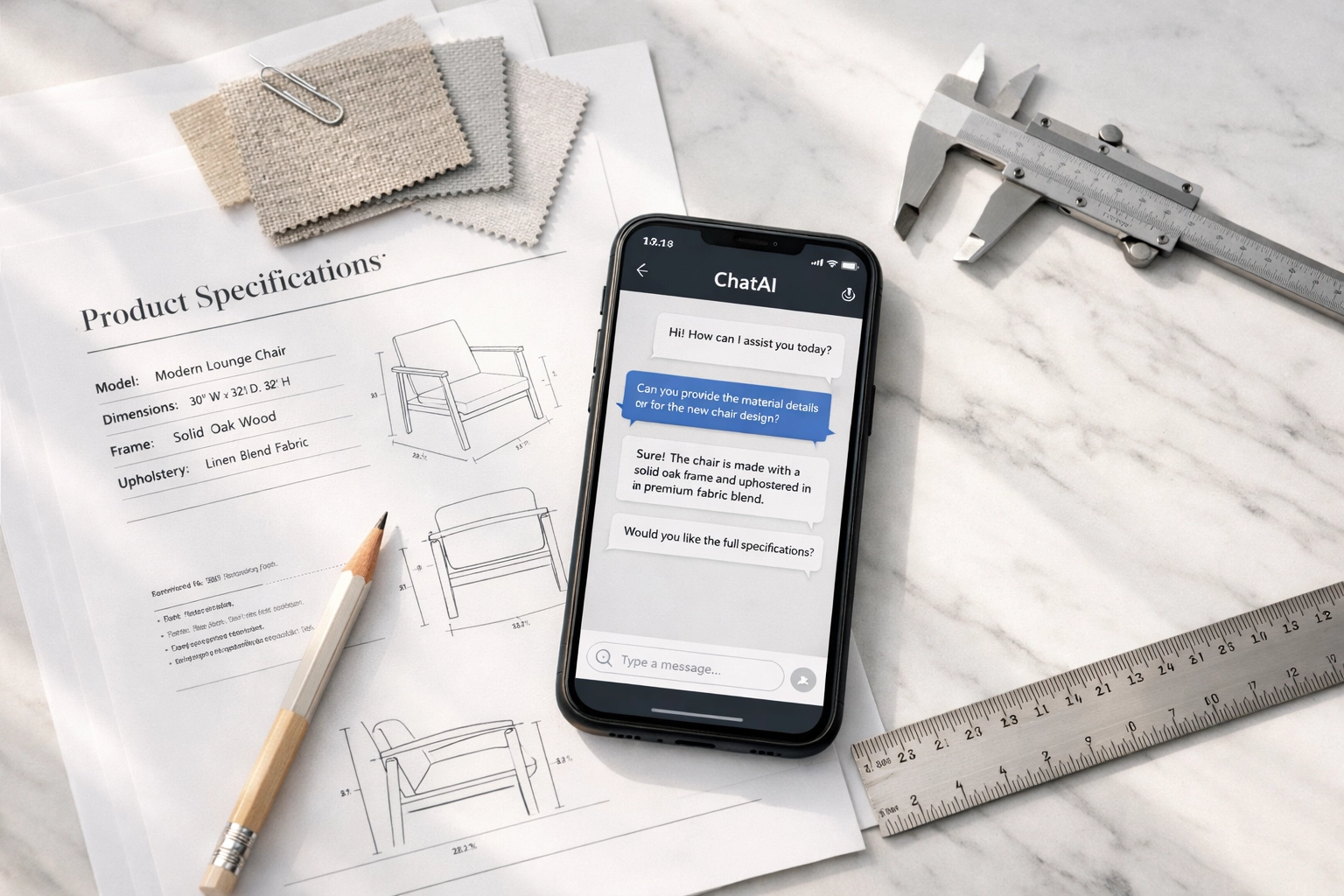
I’ve tested this across multiple Shopify and Magento implementations. Sites that restructured product data to include granular specifications, dimensions in multiple units, weight capacity, compatibility matrices, warranty terms in plain language, saw disproportionate increases in AI referrals. One client added a simple “Fits vehicles:” field with year/make/model data. Their traffic from AI assistants doubled in six weeks.
That’s not SEO magic. It’s basic information architecture. AI tools recommend your products when they can confidently answer the user’s question. Vague marketing copy makes you invisible to recommendation engines.
The Technical Implications Nobody’s Talking About
Traditional SEO taught us to optimize for crawlability and indexation. That’s still necessary. But it’s no longer sufficient.
AI agents don’t navigate your site the way users do. They parse structured data, extract entities, and build knowledge graphs from your content. That means your technical foundation needs to support machine interpretation, not just human readability.
Here’s what I’m implementing for clients right now:
- Schema.org markup beyond basic Product types: Extend to FulfillmentMethod, ShippingDeliveryTime, WarrantyPromise entities
- Explicit attribute tables: Not buried in description copy, structured, scannable data that LLMs can extract without interpretation
- Comparison-friendly content architecture: Side-by-side specification grids, not narrative descriptions
- API-first product data: If your PIM or ERP can’t export clean JSON-LD, you’re going to lose recommendation opportunities to competitors who can
The conversion gap matters here. Adobe’s data showed AI traffic converting 31% better than traditional sources (Adobe Business), but that advantage collapses if your site creates friction. High-intent visitors notice slow page loads, confusing navigation, and missing information immediately. You don’t get a second chance when someone arrives with purchase intent already formed.
Page speed and basic accessibility aren’t just nice-to-haves anymore, they’re conversion factors for the highest-value traffic segment you’ll receive.
Trust Is the Moat You Didn’t Know You Needed
Here’s a number that should change your content strategy: 47% of consumers report trusting AI assistants for recommendations. That trust extends to the sites those assistants recommend.
But that trust is conditional. 64% of shoppers report satisfaction with the links AI assistants provide, which means 36% are dissatisfied. That dissatisfaction comes from misalignment, the AI recommended your site based on incomplete or outdated data, and the customer arrived to find the product out of stock, the price different than expected, or the specifications unclear.
Golden Fact: 81% of consumers using AI assistants for shopping report improved experiences. That high satisfaction rate creates a flywheel: satisfied users return to AI assistants for more recommendations, driving more traffic to sites that earned placement. The corollary: sites that disappoint AI-referred visitors get deprioritized in future recommendations.

This is where traditional SEO thinking fails completely. You can’t trick your way into AI recommendations. There’s no black-hat equivalent. The system rewards accuracy, completeness, and alignment between what the AI promises and what your site delivers.
I’ve seen this play out in real time. A client’s product pages ranked well for traditional searches but rarely appeared in AI recommendations. The problem: their product descriptions were optimized for keywords, not questions. We restructured the content to explicitly answer “What’s the difference between X and Y?” and “Will this work with Z?” Within three months, AI referral traffic tripled, and conversion rates on that traffic segment exceeded 12%, more than double their site average.
What This Means for Your Strategy Tomorrow
The 693% spike isn’t a temporary anomaly. It’s the leading edge of a permanent shift in how consumers discover and evaluate products.
Traditional SEO optimized for visibility. Rank higher, get more clicks, capture more traffic. That model assumed scarcity, limited first-page positions, winner-take-most dynamics.
AI-driven discovery optimizes for relevance. There’s no first page. There’s no position zero. There’s only “Is this site the best answer to the user’s specific question?” If yes, you get the recommendation. If no, you’re invisible.
That changes everything about how you should structure content, measure success, and allocate resources.
Stop obsessing over keyword rankings. Start auditing whether your product data can answer specific, conversational queries. Stop chasing traffic volume. Start tracking conversion rates and revenue per session by referral source. Stop writing for Google’s algorithm. Start writing for the AI assistant that’s filtering results before a human ever sees your site.
The measurement shift matters most: clicks are a vanity metric now. What matters is recommendation frequency, conversion rate from AI referrals, and revenue per AI-driven session. If you’re not segmenting your analytics to track AI assistant traffic separately, you’re flying blind.
The Forensic Next Step
I’m not going to tell you to “optimize for AI” or “embrace the future.” That’s consultant speak.
Here’s what I’d do if I were auditing your site today: pull your GA4 data for the past six months, segment traffic by referral source, and calculate conversion rate and revenue per session for AI assistant referrals separately from traditional search. Then compare those numbers to your site average.
If AI traffic is converting better: and Adobe’s data suggests it will be: that’s your signal. That segment deserves disproportionate investment in content structure, technical optimization, and measurement infrastructure.
If you’re still measuring SEO success by keyword rankings and traffic volume, you’re optimizing for a click that’s worth less every day. The 693% spike isn’t about AI replacing search. It’s about high-intent discovery happening before users ever see a SERP.
The sites winning this shift aren’t the ones with the most content or the biggest SEO budgets. They’re the ones whose data is clean, specific, and structured for machine interpretation. That’s not magic. It’s technical rigor.
Want to know if your site is structured for AI discovery or still optimized for a dying click model? I run forensic audits from Boise that identify exactly where your technical foundation breaks down and what high-intent traffic you’re losing to better-structured competitors. This isn’t a pitch: it’s diagnostic work. Reach out if you want the unvarnished assessment.